In Thailand, the Department of Intellectual Property (DIP)—part of the Ministry of Commerce—is the government agency responsible for managing patent filings and other IP matters. All patent applications are handled directly by the DIP, which oversees the full process from filing to grant.
What is a patent in Thailand?
In Thailand, invention patents protect technical innovations that satisfy three key criteria:
-
Novelty: The invention must be new. It cannot have been disclosed anywhere in the world—by publication, speech, use, or other means—before the filing or priority date.
-
Inventive Step: The invention must not be obvious to someone skilled in the relevant technical field based on existing knowledge.
-
Industrial Applicability: The invention must be capable of being made or used in an industry (manufacturing, services, etc.).
Thailand also recognizes a 12-month disclosure grace period: if the inventor or their authorized party discloses the invention within 12 months before filing (e.g. via publication or exhibition), such disclosure will not destroy novelty, subject to conditions under Thai patent law
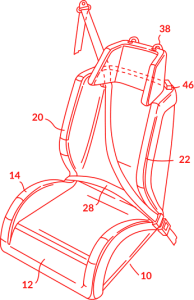
Some of Thailand patent reports:
- Patent applications filed in 2023: 13,767.
- Patents granted: 5,163.
- Top three technology areas for granted applications: Digital communication (20.1%), Computer technology (14.6%) and Semiconductors (8.3%).
How to file a patent in Thailand?
Required Documents to File a Patent in Thailand
To successfully file a patent in Thailand, you must prepare and submit the following documents to the Department of Intellectual Property (DIP):
Patent Application Form
The official application form must be completed and signed. It should include:
-
Title of the invention
-
Full name, address, and nationality of the applicant(s) and inventor(s)
-
A local address in Thailand for receiving official notifications
-
Priority information (Paris Convention or PCT, if applicable)
-
Number of pages and documents attached to the application
Specification
A full specification of the invention must be submitted, including:
-
Title
-
Field of the invention
-
Background
-
Objectives
-
Brief and detailed description
-
Drawings, figures, or examples (if any)
Claims
Applicants must clearly define the scope of protection. Claims must follow a structured format, including:
-
Preamble
-
Transition phrase
-
Body of the claim
A summary of the invention, drawings, sequence listings, and, if applicable, a certificate of deposit of biological material should also be included.
Power of Attorney
Foreign applicants must appoint a registered patent agent in Thailand. A signed Power of Attorney (POA) is required for the agent to act on behalf of the applicant.
Assignment Document
If the applicant is not the inventor, an assignment document confirming ownership must be provided.
Priority Document
If claiming priority under the Paris Convention, a certified copy of the priority document must be submitted within the prescribed time limit.
Proof of Payment
Applicants must provide evidence of payment for the official filing fees.
Apostille or Legalization
Certain foreign documents may require legalization or apostille, depending on their country of origin.
Language Requirements
All documents must be submitted in Thai. If documents are filed in another language, a certified Thai translation must be provided.
How is the Patent process in Thailand?
Patent Examination and Grant Procedure in Thailand
Once a patent application is filed, the Department of Intellectual Property (DIP) of Thailand begins the examination and granting procedure. Applicants should remain proactive throughout the process, monitor official notifications, and respond within deadlines to avoid delays or rejection. The procedure generally involves the following stages:
1. Formality Examination
DIP first reviews whether the application satisfies all formal requirements, such as completeness of documents, translations into Thai, and payment of fees. If deficiencies are found, DIP will issue an official notice requesting corrections or amendments. Failure to comply within the prescribed deadline may lead to the application being considered withdrawn.
2. Publication
If the application passes the formality stage, it will be published in the Thai Patent Gazette, usually 18 months after the filing or priority date. Applicants may also request early publication.
3. Third-Party Observations
After publication, third parties may submit written opinions or objections regarding the patentability of the invention. While examiners are not bound to adopt these arguments, they may take them into consideration during the substantive examination.
4. Substantive Examination
Unlike some jurisdictions where substantive examination is automatic, in Thailand it must be requested by the applicant within five years from the publication date. During this stage, the examiner evaluates whether the invention meets the three patentability requirements: novelty, inventive step, and industrial applicability. If objections are raised, DIP issues office actions, and the applicant must respond with amendments or arguments. Failure to resolve objections within the given time may result in refusal.
5. Granting and Maintenance
If the application is approved, DIP issues a Patent Grant Decision. After payment of the required granting and publication fees, a Patent Certificate is issued. To maintain the patent in force, annual maintenance fees must be paid starting from the fifth year after filing and for every year thereafter until expiration.
Check out this list of required documents required to file a trademark in Thailand.

Some Extra Facts
Novelty Grace Period
Thai patent law provides a 12-month novelty grace period before the filing or priority date. During this period, the inventor or their legal successor may publicly disclose the invention—through publications, commercial use, or exhibitions at officially recognized events—without losing patentability, as long as the disclosure complies with the requirements of the Thai Patent Act.
Grant, Term of Validity, and Maintenance Fees
Patents in Thailand remain valid for 20 years from the filing date, provided the applicant pays annual maintenance fees on time. Once the DIP grants the patent, applicants must pay both granting and publication fees. They must also begin paying annual maintenance fees starting in the fifth year after the filing date and continue every year thereafter. Additionally, applicants may pay these fees in advance.
Duration of the Registration Procedure
The patent registration process in Thailand typically takes 5 to 7 years from filing to grant. Processing time varies based on the invention’s complexity, the DIP’s examination backlog, and how promptly the applicant responds during examination.
Representation by a Patent Attorney
Foreign applicants must file and prosecute patent applications through a locally registered patent attorney authorized to act before the Department of Intellectual Property (DIP).
Why Work with Goytia & Associates?
Goytia & Associates maintains a strong presence in Latin America and works with trusted local partners across Asia, including Thailand. We provide efficient, cost-effective IP services with a global reach, enabling clients to manage patent filings and portfolios in more than 120 jurisdictions worldwide through a single, reliable partner.
Do you need to file a patent in another country other than Thailand?
This content may suffer modifications due to updates in the official regulations of Thailand.